

If you have tried shampoo after shampoo for a flaky, itchy scalp, you may have heard someone suggest a Siddha oil for dandruff. Siddha is one of India's traditional systems of medicine, rooted in Tamil Nadu and Kerala, and many of its hair oils are made by slowly preparing herbs in coconut oil. Two herbs come up again and again in Siddha scalp care: Vetpalai and Poduthalai. This guide explains what they are, how a Siddha oil fits into a dandruff routine, and how to use one carefully.

What makes an oil a "Siddha" oil?
A Siddha oil is prepared according to methods described in Siddha texts. Usually, herbs are combined with a base oil such as coconut or sesame oil and heated or processed over time so the oil takes on the herbs. Some preparations also use a sun-based process called Surya Pudam, where the herb and oil mixture is kept in sunlight over a set number of days.
This is different from a cosmetic hair oil that simply adds a fragrance or an extract to mineral oil. When you look for a Siddha oil, check that the label names its herbs, its base oil and the way it is prepared.
Meet the two herbs: Vetpalai and Poduthalai
Vetpalai (Wrightia tinctoria)
Vetpalai is the Tamil name for Wrightia tinctoria, a small tree also known as pala indigo or sweet indrajao. It grows across dry regions of South India. Its leaves have a long history of use in Siddha preparations for the skin and scalp, and it is one of the best-known herbs in traditional Tamil scalp care.
Poduthalai (Phyla nodiflora)
Poduthalai is Phyla nodiflora, a low, creeping plant with tiny white and pale purple flower heads, sometimes called fog fruit or frog fruit. It is often seen near water and in damp fields. In Tamil, the name is commonly linked to "podugu", the word for dandruff, which shows how closely this plant is tied to scalp care in Siddha tradition.
The coconut oil base
Coconut oil is the most familiar hair oil in Kerala and Tamil Nadu homes. It spreads easily, helps moisturise a dry scalp and carries the herbs in Siddha preparations.
A closer look at Dandoff
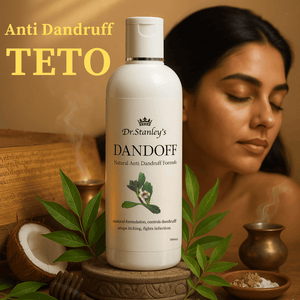
Dr. Stanley's Dandoff TETO oil is a Siddha formulation from Thiruvananthapuram, Kerala, made with exactly these three ingredients: Vetpalai, Poduthalai and pure coconut oil. According to its product page, the blend goes through a 14-day Surya Pudam process followed by slow boiling. It comes in a 500 ml bottle, and each order includes a note with a WhatsApp number to reach the doctor for usage, diet and lifestyle guidance.
How to use a Siddha oil for dandruff
The way you apply an oil matters as much as which oil you choose. These steps follow Dandoff's own directions.
1. Patch-test first
Apply a little oil to a small area of the scalp or behind the ear and wait a day. If you notice redness, burning or more itching, do not continue.
2. Apply before your bath
- Part your hair. Make a few partings so the oil reaches the scalp, not just the hair.
- Use a small amount. Pour a little into your palm or a small bowl and dab it onto the scalp with your fingertips.
- Do not rub hard. The Dandoff directions specifically caution against rubbing, because unnecessary rubbing can pull on hair and add to hair fall. Gentle pressing is enough.
3. Bathe, then press dry
After your bath, press excess water out of your hair with a towel instead of rubbing it. The directions suggest letting a light layer of the oil remain on the scalp.
4. Overnight, only if it suits you
If you are already used to leaving oil on overnight, you can do so. The product directions note this is not advised for people with sinusitis or migraine headaches. Use a cotton cap or an old pillow cover to protect your bedding.
5. Be consistent
Daily use as part of your routine works better than oiling once in a while. Give any new routine a few weeks before you judge it, and keep notes on how your scalp feels.
Habits that support a calmer scalp
- Wash on a regular schedule with a mild shampoo and lukewarm water.
- Rinse thoroughly so no shampoo or oil build-up is left behind.
- Do not tie up wet hair or sleep with it damp.
- Wash combs, towels and pillow covers often.
- Avoid scratching, even when the scalp itches.
- Eat regular, balanced meals, drink enough water and try to sleep well.
Common mistakes to avoid
- Skipping the patch test because an oil is herbal.
- Using a large amount of oil, which makes washing harder.
- Scrubbing the scalp vigorously while oiling.
- Switching between many products every few days.
- Applying oil on broken, oozing or very painful skin.
When to see a doctor
Flakes are not always dandruff. Psoriasis, eczema and fungal infections can look similar. Please consult a qualified doctor or dermatologist if:
- Your scalp is red, thick-scaled, sore, oozing or bleeding.
- Flaking spreads to your face, ears or body.
- You notice patchy hair loss.
- Home care has not made a difference after a few weeks.
- The oil is for a child, or you are pregnant or breastfeeding.
Frequently asked questions
Is a Siddha oil the same as an Ayurvedic oil?
No. Siddha and Ayurveda are separate traditional systems of Indian medicine. They share some herbs and methods, but Siddha has its own texts, preparations and Tamil names for herbs such as Vetpalai and Poduthalai.
Can I use a Siddha oil along with my anti-dandruff shampoo?
Many people oil before a bath and then wash with their usual shampoo. If your doctor has prescribed a medicated shampoo, ask them how best to combine the two.
Should I apply the oil on a wet or dry scalp?
Apply it on a dry scalp before your bath. Oil spreads more evenly and stays on the skin better when the scalp is dry.
Can the whole family use the same bottle?
Use a clean bowl or pour the oil into your palm rather than touching the bottle opening to the scalp. Each person should patch-test first, and check with a doctor before using it on a child.
Important: This article is for general information only and is not medical advice. Please consult a qualified doctor or dermatologist about your scalp condition, always patch-test any new product before regular use, and stop use if you notice irritation.