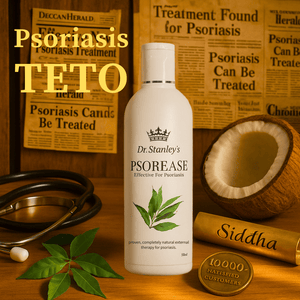






Scalp psoriasis can feel like a constant, itchy secret under your hair. The flakes land on dark clothes, the patches feel tight, and scratching only seems to make things worse. If you are looking for scalp psoriasis care at home, the good news is that small, steady daily habits can make the scalp feel more comfortable. This guide explains what is going on in plain words, which habits help, how to use a Siddha oil gently, and when it is time to see a doctor.

Shop the oil from this guide
Pay online (prepaid) and get 10% off.
Includes a free 12-week plan book with prepaid orders.
What is scalp psoriasis, in simple words?
Psoriasis is a long-term skin condition in which skin cells build up faster than usual. On the scalp, this often shows up as raised, red or pinkish patches covered with silvery-white scales. The patches may sit along the hairline, behind the ears or at the back of the neck. Many people feel itching, burning or tightness, and the scales can flake off like heavy dandruff.
Psoriasis is not contagious. You cannot catch it from someone, and you cannot pass it on by sharing a comb. It also tends to come and go: there may be calm phases and flare-ups.
Common triggers people notice
- Stress: exam season, work pressure or family worries often line up with flare-ups.
- Dry weather: North Indian winters and air-conditioned rooms can dry out the scalp.
- Scratching and picking: injury to the skin can make patches angrier.
- Harsh products: strong shampoos, hair dyes and very hot water can irritate the scalp.
- Lifestyle factors: smoking, alcohol and poor sleep are often linked with more frequent flares.
Daily scalp psoriasis care habits that help
There is no single trick. What helps most is a gentle, consistent routine you can follow on busy days too.
1. Keep the scalp moisturised
Dry scales crack and itch more. Regularly oiling or moisturising the scalp can soften scales so they lift more easily. Many people find that applying oil at night and washing in the morning is the easiest routine.
2. Wash gently
- Use lukewarm water, not hot water.
- Choose a mild, fragrance-free shampoo unless your doctor has suggested a medicated one.
- Use your fingertips, not your nails, while washing.
- Pat hair dry with a soft cotton towel instead of rubbing hard.
3. Do not pick or scrape scales
It is tempting to pull off thick flakes, but forcing them off can cause small wounds and more irritation. Soften them first with oil, then let them loosen on their own or lift them very gently with a wide-tooth comb.
4. Manage the itch without scratching
Keep nails short. A cool, damp cloth pressed on the itchy area for a few minutes may help soothe the urge to scratch. Try to notice when you scratch most (often at night or while watching a screen) and keep your hands busy at those times.
5. Support your body from the inside
Regular sleep, simple home-cooked meals, enough water, gentle exercise like walking or yoga, and some stress-release time all support overall skin health. Limiting smoking and alcohol is also widely advised for people with psoriasis.
How to use a Siddha oil for scalp psoriasis care
Siddha is one of India's oldest traditional systems of medicine, with deep roots in Tamil Nadu and Kerala. Herbal oils are a central part of Siddha skin care. At Dr. Stanley's, our Psorease TETO oil is made with two ingredients, Wrightia tinctoria (known as Vetpalai in Siddha) and coconut oil, prepared using a 14-day Surya Pudam process described in Siddha literature. Coconut oil is a familiar, gentle moisturiser, which is why it is a classic base for scalp oils.
Step-by-step routine
- Patch-test first. Pick a small affected spot that is not easily visible. Apply the oil gently on just that spot 3 to 4 times a day, leave it on for at least four hours, and continue for 2 to 3 days. If there is no reaction, slowly extend use to other areas. If you notice any allergy or discomfort, stop using it.
- Part your hair into sections. This helps the oil reach the scalp instead of only coating the hair.
- Apply gently. Pour a small amount onto your palm or fingertips and dab it on the patches. Do not rub or massage hard, as that can irritate the skin.
- Re-apply as it absorbs. The oil usually soaks in within 30 to 45 minutes. You can apply again once it is absorbed.
- Leave it on. Let the oil stay on the area for at least four hours. Many people prefer applying it in the evening and washing the next morning. A cotton cap or an old pillowcase protects your bedding.
- Wash with a mild shampoo. Use lukewarm water and pat dry.
- Be consistent. Skin care routines work best when followed daily, not only on bad days.
Every person's skin responds differently, and results vary. If you are already using a cream or medicine prescribed by your doctor, ask them before adding any new product to your routine, and do not stop prescribed medicines on your own.
When to see a doctor
Home care is a support, not a replacement for medical advice. Please see a qualified doctor or dermatologist if:
- You are not sure whether it is psoriasis, dandruff, a fungal infection or something else.
- Patches are spreading quickly, bleeding, oozing or very painful.
- You notice hair thinning in the affected areas.
- You have joint pain, swelling or morning stiffness along with skin patches.
- The itch is disturbing your sleep or daily life.
- You are pregnant, breastfeeding, or the patient is a child.
Frequently asked questions
Is scalp psoriasis the same as dandruff?
No. Dandruff usually gives small, loose, white or yellowish flakes without thick patches. Scalp psoriasis tends to form raised, well-defined patches with thicker silvery scales, sometimes extending past the hairline. A doctor can confirm which one you have.
Can I oil my scalp every day if I have psoriasis?
Many people find daily moisturising comfortable, because dryness tends to increase itching and scaling. Apply gently, avoid hard rubbing and wash with a mild shampoo. If your scalp feels more irritated, stop and check with your doctor.
How long should I leave the oil on?
For Psorease, the usage guidance is to let the oil stay on the affected area for at least four hours. Many people find an overnight routine the easiest to follow.
Can I colour my hair if I have scalp psoriasis?
Hair dyes can irritate a sensitive scalp. If you choose to colour, do a patch test 48 hours before, and avoid dyeing during an active flare. Ask your dermatologist if you are unsure.
Does stress really affect scalp psoriasis?
Many people notice flares during stressful periods. Simple stress-release habits like a short walk, breathing exercises, prayer or meditation, and regular sleep are worth building into your week.
Start your routine today
Pay online (prepaid) and get 10% off.
Includes a free 12-week plan book with prepaid orders.
Important: This article is for general information only and is not medical advice. Please consult a qualified doctor or dermatologist about your skin condition, always patch-test any new product before regular use, and stop use if you notice irritation.